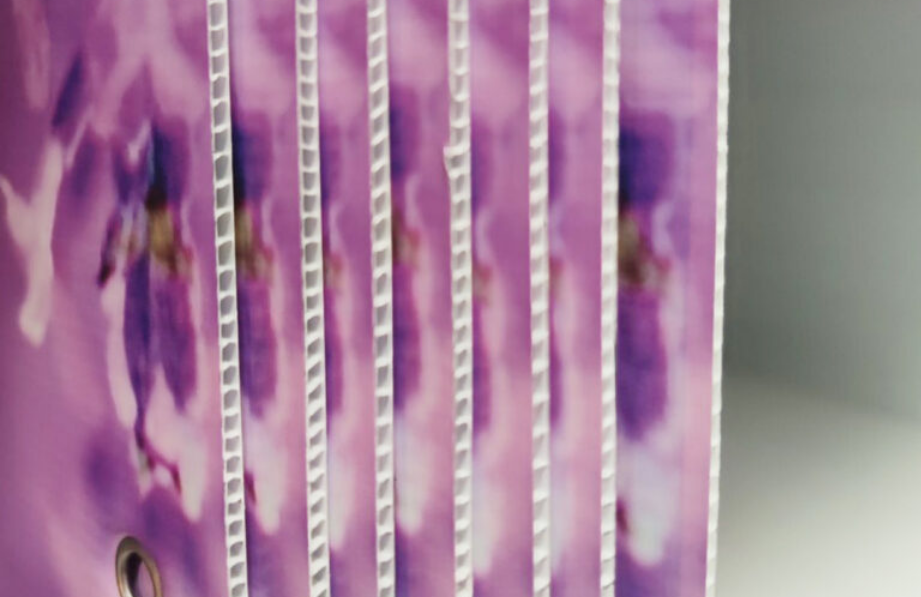
Choose Corflute for lightweight, economical and frequently replaced safety signs on temporary sites. Choose ACM for rigid, flatter and longer-term signs where a more durable panel and stronger mounting are appropriate. Material alone does not make a safety sign compliant.
Safety signage can help workers, visitors and the public recognise hazards, follow site rules and find the correct route. The board material affects how the sign travels, mounts and survives on site, but the message, symbol, size, visibility and position must still suit the actual risk.
Both printed Corflute signs and ACM board signs can support workplace and construction signage. The practical choice usually comes down to how long the sign is needed, how exposed it will be and what it will be fixed to.
Corflute vs ACM: quick comparison
| Factor | Corflute | ACM |
|---|---|---|
| Best fit | Temporary and frequently changed site signage | Longer-term and more permanent-looking signage |
| Rigidity | Lightweight fluted plastic; can flex between supports | Rigid aluminium composite panel with a flat face |
| Weight | Very light and easy to move | Heavier than Corflute and needs stronger mounting |
| Weather exposure | Useful for short-to-medium outdoor campaigns when properly fixed | Better suited to longer outdoor use when correctly specified and installed |
| Cost | Lower-cost option for quantities and replacements | Higher initial cost for greater rigidity and presentation |
| Printed sides | Single- or double-sided options available | Commonly direct printed as a rigid panel; confirm viewing direction |
| Typical fixing | Fence ties, eyelets, frames or supported mounting | Screws, standoffs, framing or installer-specified fixings |
Choose Corflute for temporary and changing site information
Corflute is a strong operational choice when signs need to be installed quickly, moved between work zones or replaced as the project changes. It is economical enough for multiple access points, repeated messages and short project phases.
Common uses include site entry rules, PPE reminders, temporary pedestrian routes, delivery instructions, restricted-area notices and contractor information. Because the board is light, it is easier to transport in quantity and can be attached to suitable fences or temporary frames.
The trade-off is rigidity. Large Corflute panels may flex, bow or become untidy if they are unsupported or unevenly tied. The flutes also create a directional structure, so hole placement and mounting should be planned rather than improvised on site.
Choose ACM for rigid and longer-term safety signage
ACM uses thin aluminium faces around a polyethylene core. The panel stays flatter than Corflute and presents a cleaner, more permanent finish. It suits longer projects, fixed workplace entrances, repeated site rules and signs that need to remain professional over a longer period.
ACM can be a better fit for main site boards, durable access instructions, facility safety information and signs mounted to walls or robust frames. Standard lamination is included in 3A Print’s current online ACM pricing, helping protect the printed face.
The trade-offs are cost, weight and installation. A rigid panel can place more demand on the support and fixings. Drilling, complex cutting, folded trays, specialist fixings and installation are not automatically included in the online material price and may need a separate quote.
The sign is temporary, needs to move, may be replaced as work changes, or is required in economical quantities.
The sign needs a rigid, flat panel for longer service and the wall, frame or posts can support the selected fixing method.
Material is only one part of effective safety signage
A safety sign should be easy to see, understand and keep current. Use the correct wording, recognised symbols and colour conventions for the situation. Choose a finished size based on viewing distance and keep critical information away from edges, holes and fixings.
WorkSafe New Zealand guidance emphasises clear, visible and maintained signage in relevant workplace situations, and also makes clear that paperwork and signs are not substitutes for effective processes and control measures. Where specific hazards such as hazardous substances are present, additional regulatory sign requirements may apply.
What to confirm before ordering
- The exact approved wording, symbol and colour treatment.
- Who must see the sign and the required viewing distance.
- Indoor or outdoor location, expected service period and weather exposure.
- Finished width and height of every sign in millimetres.
- Single- or double-sided viewing and the direction people approach from.
- The wall, fence, frame or posts and the intended fixing method.
- Whether holes, eyelets, rounded corners, lamination or installation are required.
- Who will inspect, clean, update and replace the sign after installation.
Supply a print-ready PDF with fonts embedded or outlined. Check wording, phone numbers, arrows and symbols before approval. For a group of signs, use a controlled list so every location receives the correct message.
Simple recommendation
Use Corflute for temporary, mobile and frequently replaced safety messaging. Use ACM for rigid, longer-term signage—then specify the mounting and safety content for the exact location.
Common questions
Which material is better for a temporary construction site?
Corflute is usually the more economical and flexible option for temporary phases and signs that will move or change. ACM may still be suitable for the main entrance or other longer-term positions.
Can Corflute be used outdoors?
Yes, for suitable temporary outdoor applications when the panel is correctly supported and fixed. Exposure, size, wind and installation all affect performance.
Does ACM make a sign compliant?
No. ACM provides a rigid sign panel, but compliance depends on the approved message, symbols, colour, size, placement, visibility, maintenance and the specific workplace requirement.
Can the signs be supplied with holes or special shapes?
Special cutting, drilling, eyelets and other finishing depend on the product and may require a separate quote. Send the mounting plan before production so the artwork and finishing can be coordinated.
Safety references
For current New Zealand workplace guidance, see WorkSafe: How to manage work risks and WorkSafe: Hazardous substances signs. Confirm the requirements that apply to your own site and hazard.